Provins: The Medieval Trade-Fair Town 80 Minutes from Paris
Provins is the best-preserved medieval trade-fair town in France, a UNESCO World Heritage Site since 2001, and it costs nothing extra to reach: the Transilien Line P from Gare de l’Est runs there direct in about 80 minutes, covered by a Navigo pass. In the Middle Ages the Counts of Champagne ran Europe’s trading floor here, and the money built what still stands: 25-meter ramparts, a 12th-century keep, vaulted merchant cellars, and an upper town that never got modernized because the trade moved on and left it alone.
The Upper Town
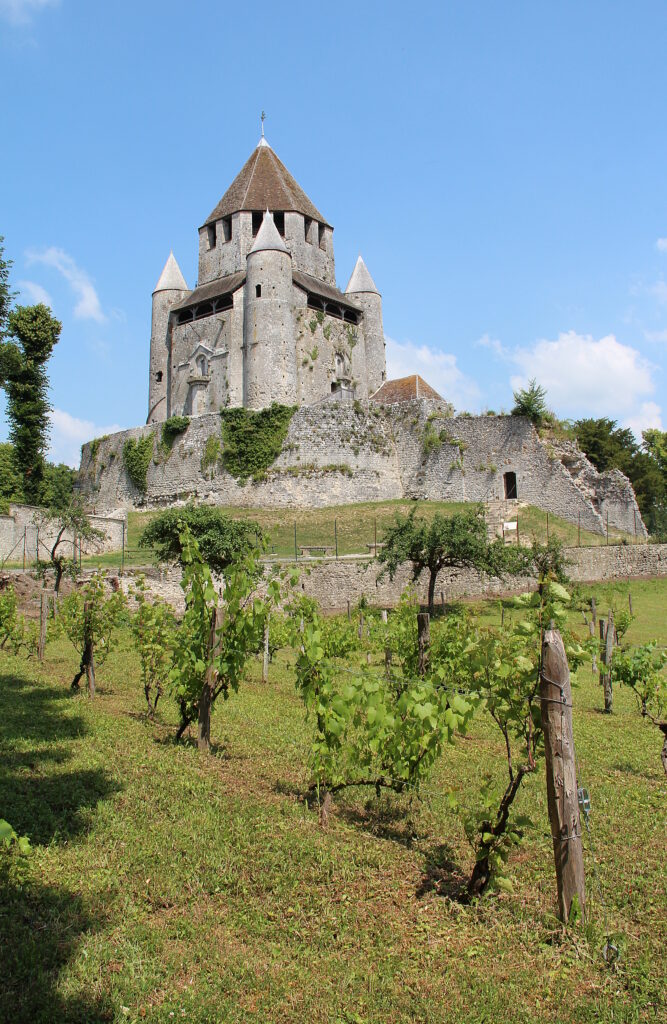
Four monuments carry the visit. The Tour César, the keep on the hilltop, gives a 360-degree view over roofs and wheat plains in exchange for a climb of narrow stairs. The ramparts run their best stretch between Porte Saint-Jean and Porte de Jouy, walkable on top. The Grange aux Dîmes, a vaulted tithe barn, stages the fair scenes that explain why this little town mattered to all of Europe. And under the streets, guided visits open the network of vaulted galleries the merchants dug into the hillside. The monuments open year-round, and the combined Provins Pass covers the set for less than separate tickets; details and booking sit on provins.net.
The Shows and the June Festival
From late March to early November, Provins stages two medieval shows on separate tickets: Les Aigles des Remparts, falconry with eagles and vultures sweeping over an open-air theater against the walls, and La Légende des Chevaliers, a mounted stunt show in the moat. Showtimes shift by month, so check the schedule before promising anyone the birds. One weekend every June, Les Médiévales de Provins turns the whole town into France’s largest medieval festival: over 300 artisan stalls, jousts, parades, and around 120,000 visitors in costume and out of it. Book festival entry online ahead; it costs less than at the gate. The rose is the town’s other signature, grown here since the Crusades, sold candied in every shop, and tradition ties the red rose of Lancaster to a Provins bloom.
Getting There and Timing
Line P leaves Gare de l’Est for Provins about hourly; the ride takes 1 hour 20 minutes, the terminus is Provins, and a Navigo pass covers it, which makes this the cheapest UNESCO day trip Paris offers. From the station in the lower town, the upper town is a 15-to-20-minute walk uphill. A comfortable full day covers the monuments, a show, and lunch; on festival weekend, go early and expect crowds. Winter is the quiet version: some sites run reduced hours, but the ramparts, the keep, and the lanes work in any season, and December adds a Christmas market. The full ranking sits in the top 30 day trips from Paris.
Frequently Asked Questions
How do you get to Provins from Paris?
Transilien Line P direct from Gare de l’Est, about 1 hour 20 minutes, roughly hourly, terminus Provins. A Navigo pass covers the whole trip. The upper town is a 15-to-20-minute uphill walk from the station.
What is the Provins Pass?
A combined ticket covering the main monuments, including the Tour César, the underground galleries, and the Grange aux Dîmes, for less than the sum of separate entries. The medieval shows are ticketed separately.
When do the Provins medieval shows run?
The falconry show Les Aigles des Remparts and the equestrian show La Légende des Chevaliers run from late March to early November on separate tickets, with showtimes that change by month. Check provins.net for your date.
Is Provins worth visiting in winter?
Yes, with adjusted expectations. The shows stop and some sites run reduced hours, but the ramparts, the keep, and the old lanes stay open, the crowds vanish, and December brings a Christmas market.
Why is Provins a UNESCO World Heritage Site?
As the best-preserved town of the medieval Champagne trade fairs, where merchants from across Europe met under the protection of the Counts of Champagne. The ramparts, keep, tithe barn, and vaulted cellars survive from that economy.